
Rawalpindi · Dermatology
Your skin usually warns you before a problem gets serious. The question is whether you are listening, or reaching for one more cream.
What this guide covers
Key Takeaways
- Acne that lingers past your teenage years usually needs a prescription plan, not another cleanser.
- A mole that changes shape, colour or size deserves an appointment within days, not months.
- Melasma rarely fades on its own. It responds best to a supervised, ongoing plan built around sun protection.
- Rawalpindi’s dust, hard water and sharp seasonal swings make a yearly skin check worth the habit.
- A dermatologist treats the cause of a skin problem. A facial or home routine treats the surface.
You have tried three products this year. The breakout keeps returning in the same patch along your jaw, and the pigmentation on your cheeks looks a shade darker every month.
At some point the question stops being which cream to buy next. It becomes who you should actually be asking.
Between the dust, the sun exposure and the weather swings across Rawalpindi, skin concerns are common, and searches for a trusted dermatologist in Rawalpindi have grown for good reason. This guide walks through why local conditions matter, the seven signs worth acting on, what a real consultation looks like, and how conditions like melasma and acne scarring are actually treated.
Why Rawalpindi’s Climate Strains Your Skin
Skin problems are rarely random. In Rawalpindi, three local factors show up again and again in consultations: dust and traffic pollution that clog pores through the day, hard water that strips the skin’s natural barrier during washing, and a climate that swings from intense summer UV to dry, cracking winter cold within a few months.
Each of these on its own is manageable. Together, they explain why breakouts, pigmentation and sensitivity tend to cluster in this region more than skincare marketing usually admits. A routine built for humid coastal weather or for a different skin tone often does not translate well here, which is one reason generic advice from social media falls short.
None of this means something is wrong every time your skin acts up. A breakout before a stressful week or dryness in peak winter is normal and usually settles within a week or two on its own. A warning sign looks different: it persists past a few weeks, it spreads, it changes shape or colour, or it starts affecting your confidence and daily routine. That shift from ordinary to persistent is the cue to stop self-treating.
The 7 Signs You Need to See a Dermatologist in Rawalpindi
None of these signs mean something is seriously wrong. They mean a trained eye should look, because guessing at home has a ceiling.
1. Acne that will not clear after 8 to 12 weeks
Over the counter washes and spot creams work for mild, occasional breakouts. If acne persists past two to three months despite consistent use, or if it is concentrated along the jawline and chin in a hormonal pattern, it usually needs a prescription-level approach. Options range from topical retinoids to short courses of oral treatment, and the right one depends on an accurate diagnosis of the acne type first.
2. A mole or spot that is changing
Dermatologists commonly check moles against five features: asymmetry, an irregular border, uneven colour, a growing diameter, and any evolving change over time. If a mole ticks more than one of these boxes, or starts to bleed or itch, book an appointment promptly. The American Academy of Dermatology’s ABCDE guide is a useful home reference, but a consultant exam is what actually confirms whether a spot is harmless.
3. Pigmentation or dark patches that keep spreading
Symmetrical brown or grey-brown patches across the cheeks, forehead or upper lip are often melasma. It is commonly triggered or worsened by sun exposure, pregnancy hormones or birth control, and it tends to worsen with continued exposure rather than fade on its own without a structured treatment plan.
4. A rash that keeps coming back
A rash that returns repeatedly or lasts more than three to four weeks can point to eczema, contact dermatitis from a product or fabric, or a fungal infection that looks similar to other conditions but needs different treatment. Proper testing beats repeated guesswork with different creams.
5. Sudden hair thinning or scalp irritation
Hair and scalp health are part of dermatology too. Sudden shedding, flaking or persistent scalp itch can stem from several causes, including stress-related hair loss, dandruff, or scalp psoriasis, which look similar but respond to different treatments once properly assessed.
6. Acne scars affecting your confidence
Textured or pitted scarring from past breakouts does not fade with skincare alone. Scars are generally classed as boxcar, rolling or ice-pick, and several clinical options exist for each. The right one depends on your scar type, depth and skin tone.
7. Skin that reacts to everything, or ages faster than expected
Constant sensitivity to new products often signals a compromised skin barrier rather than a run of bad luck with formulas. Skin that looks noticeably more lined, dull or uneven than your age would suggest is frequently a sign of cumulative sun exposure rather than genetics alone, and both are worth a professional review rather than another round of trial and error.
When to Act on a Skin Symptom
A rough guide to urgency, not a diagnosis
What Happens During a Dermatology Consultation
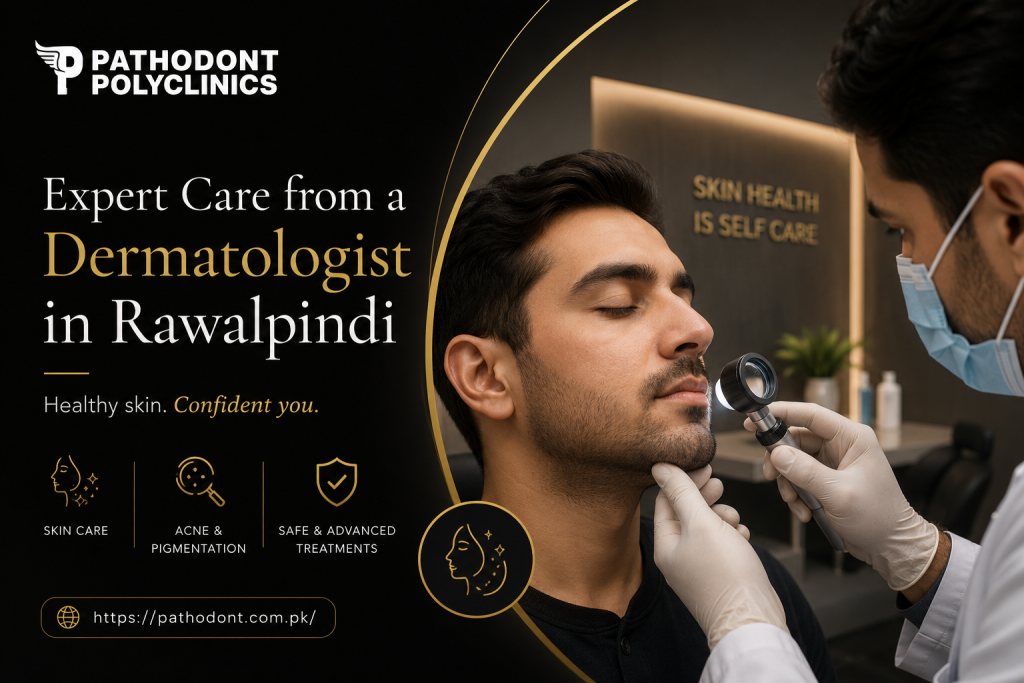
A proper consultation starts with a conversation, not a prescription pad. Expect questions about your medical history, current products, daily sun exposure and how long the concern has been present before any physical exam begins.
At consultant-led dermal services in Rawalpindi, your skin is examined directly under proper lighting, the likely cause is explained in plain language, and a plan is built around your skin type rather than a generic protocol. Pathodont’s dermatology team works to CDC, FDI and NICE-aligned standards, and treatment suitability is always confirmed on a case by case basis rather than assumed. The clinic’s founder, Prof. Dr. Joharia Azhar, brings over two decades of clinical and laser training, including specialist training completed in Germany, to how the wider consultant team approaches skin and aesthetic care.
Most first visits run 20 to 40 minutes depending on complexity. You typically leave with a written plan, realistic expectations about timelines, and a follow-up date so progress can actually be tracked rather than assumed.
Your First Visit at a Glance
Three phases, one plan built around your skin
Sunscreen matters year round in Rawalpindi, not just in summer. Sun exposure is one of the biggest drivers behind pigmentation and melasma getting worse, and no sunscreen offers complete protection on its own, so pairing it with shade and a hat during peak hours still helps.
| Qualified Dermatologist | Salon or Home Skincare | |
|---|---|---|
| Diagnoses the cause | Examines and identifies the underlying issue | Treats visible symptoms only |
| Handles melasma or scarring | Uses tested clinical protocols | Limited to surface-level products |
| Prescribes medical-grade treatment | Available when needed | Not available |
| Tracks progress over time | Structured follow-up plan | Rarely monitored |
Using strong steroid creams for months without supervision can thin the skin and worsen pigmentation over time. If a product was not prescribed for your specific concern, check with a dermatologist before continuing it long term.
Melasma and Acne Scars, Explained
These are the two concerns Rawalpindi patients ask about most, and both need patience rather than a quick fix.
According to the British Association of Dermatologists, melasma currently has no permanent cure, but sun protection combined with targeted treatments such as lightening agents or tranexamic acid can visibly improve its appearance over time. Tranexamic acid works by calming the pigment-producing activity that drives melasma, and it is typically used alongside strict daily sun protection rather than on its own. Results and timelines vary from person to person, which is why an assessment matters before starting any plan, and why melasma often needs a maintenance routine even after visible improvement.
Acne scarring works on a similar principle. Laser and aesthetic treatments can improve texture and depth significantly, but the right technique depends on whether the scarring is shallow, boxcar or deeply pitted. A HydraFacial or chemical peel may suit surface texture concerns, microneedling can help stimulate collagen for shallower scarring, while deeper boxcar or ice-pick scars usually need a laser-based approach discussed directly with your dermatologist. Most laser scar treatments are delivered as a short series of sessions spaced several weeks apart, rather than a single visit.
Common Skin Concerns We See in Rawalpindi
Where to start, based on what’s actually bothering you
Acne & Breakouts
Persistent or hormonal acne, blackheads and clogged pores from dust and pollution.
Pigmentation & Melasma
Sun-driven dark patches and uneven tone across the cheeks and forehead.
Signs of Ageing
Fine lines, loss of firmness and dullness from cumulative sun exposure.
Sensitive or Reactive Skin
Barrier damage from hard water, harsh actives or over-exfoliation.
Frequently Asked Questions
Who is considered a good dermatologist in Rawalpindi?
A good dermatologist in Rawalpindi is board-qualified, examines you directly rather than prescribing over the phone, and explains the cause before suggesting treatment. Pathodont’s consultant-led clinic follows recognised protocols and is transparent about how long results typically take.
What are the signs I should see a skin doctor in Rawalpindi?
See a skin doctor if acne persists past 8 to 12 weeks, a mole changes shape or colour, pigmentation keeps spreading, a rash returns repeatedly, or hair thinning appears suddenly. Any of these are better assessed early than left to guesswork.
What is the best treatment for melasma on the face?
There is no single best treatment for every case. Daily sun protection is the foundation, often combined with lightening agents, chemical peels or tranexamic acid under supervision. A dermatologist matches the approach to your skin tone and how long you have had the pigmentation.
Does laser treatment help with acne scars?
Laser treatment can meaningfully improve the appearance of many acne scar types, particularly textured or pitted scarring. Results depend on scar depth and skin type, and most patients need a short series of laser and aesthetic treatment sessions rather than one visit for a visible change.
Is there a female dermatologist available in Rawalpindi?
Yes. Pathodont Polyclinics in Rawalpindi is led by Prof. Dr. Joharia Azhar, Principal Consultant and Founder, alongside a female-inclusive dermatology team. If you have a preference for a female consultant, mention it when booking so your appointment is scheduled accordingly.
What is the difference between a dermatologist and a general skin specialist?
A dermatologist is a medical doctor specifically trained in skin, hair and nail conditions, able to diagnose and prescribe treatment. A general skin specialist or aesthetician typically focuses on cosmetic procedures without the same diagnostic medical training.
Not Sure If It’s Time? Let a Consultant Tell You.
A short consultation with a qualified dermatologist in Rawalpindi can clear up in one visit what months of guessing cannot. Pathodont Polyclinics offers consultant-led dermatology care under internationally aligned protocols.
Book a Consultation →This article is for educational purposes and does not replace a professional dermatology consultation. Treatment suitability and results vary from person to person.